

Heating & Cooling
How Often Should I Check or Replace My HVAC Filter?
A simple habit that helps your heating and cooling system run as intended. Here's how to find your filter, read its label, and set a sensible routine.
By Studio800 Editorial · Published November 2, 2026 · Updated
Why the filter matters
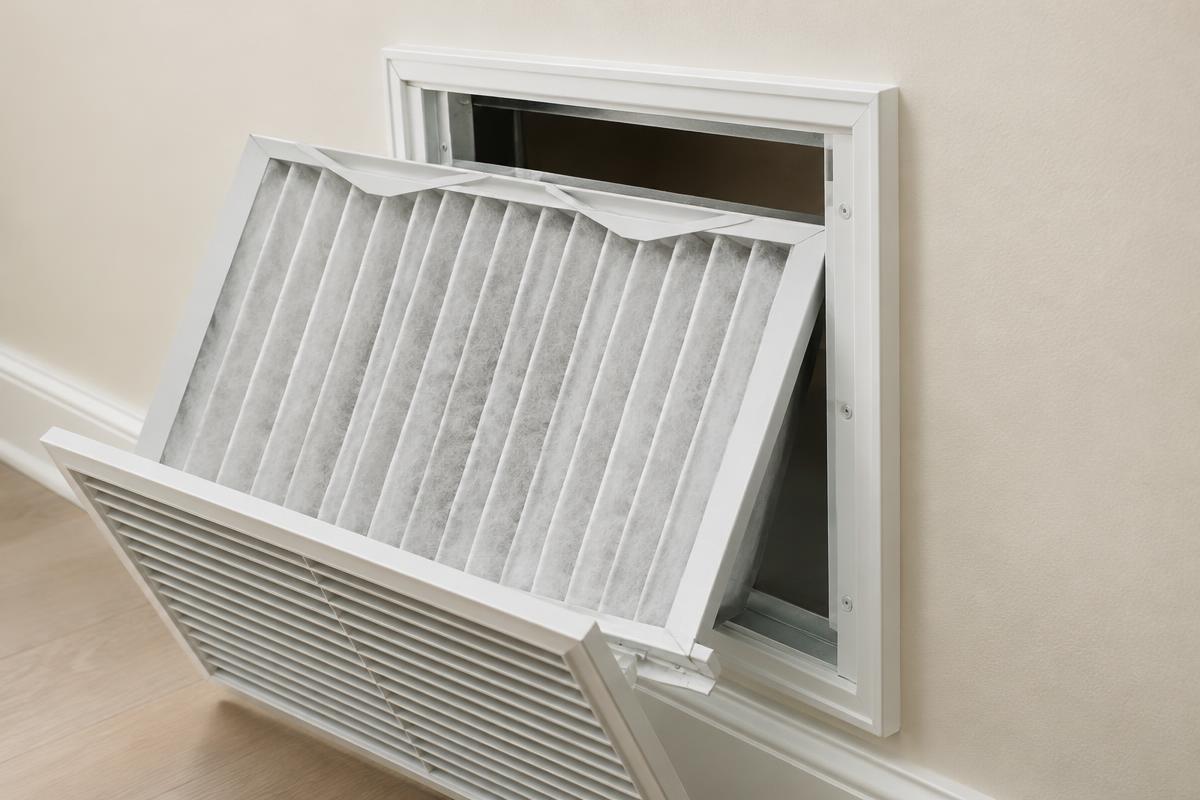
A forced-air system pulls room air through a filter before heating or cooling it. As the filter collects dust, airflow through it drops. A clogged filter can make the system work harder and can let dirt build up on internal parts.
Finding your filter
Turn the system off at the thermostat before removing a filter.
- Behind a large return-air grille on a wall or ceiling (often in a hallway).
- In a slot on or next to the furnace or air handler.
- Some homes have more than one return, and more than one filter.
Reading the label
Filters are printed with their nominal size (for example, 16 × 25 × 1) and an airflow arrow. The arrow points toward the furnace or air handler — in the direction the air travels. Write the size somewhere you'll see it, such as inside the grille or on your maintenance record.
Filters also carry an efficiency rating, commonly a MERV number. Higher ratings capture smaller particles but can restrict airflow in some systems. If you're considering a higher-rated filter than you currently use, check your equipment manual or ask an HVAC technician whether your system is designed for it.
A routine that's easy to keep
- Pick a fixed day each month to look at the filter.
- Hold it up to a light. If you can't see light through it easily, or it looks gray and matted, replace it.
- Keep a spare or two of the correct size on hand.
- Note the date on the filter's frame with a marker when you install it.
Checklist
- Find every filter location in your home
- Write down each filter's exact size
- Install with the airflow arrow pointing toward the equipment
- Set a monthly reminder to check
- Keep spare filters on hand
When to call a professional
- You smell burning, gas, or anything unusual from the equipment. If you smell gas, leave the home and call your gas utility from outside.
- The system short-cycles, makes new loud noises, or stops heating or cooling.
- You find water pooling around the indoor unit.
- It's time for routine professional maintenance; ENERGY STAR recommends annual pre-season check-ups.
Sources
Studio800 provides general educational information, not professional advice. Your equipment manuals, local codes, and qualified professionals take priority. Editorial standards
Keep reading
How to Create a Simple Home Maintenance Schedule
A realistic monthly, seasonal, and yearly rhythm you can actually keep.

A Practical Fall Home Maintenance Checklist
Autumn is the season to prepare for cold weather: clear water's path away from the house, ready the heat, and check safety devices.
What to Check Before Calling a Home Repair Professional
Quick checks that can save a service call, and details that help a professional help you.