

Water & Moisture
Why Is There Condensation on My Windows?
Fog or droplets on glass usually point to indoor humidity meeting a cold surface. Where it forms tells you a lot about what to do next.
By Studio800 Editorial · Published November 2, 2026 · Updated
First, find where the moisture is
Run a dry finger across the glass. The location of the moisture is the single most useful clue.
- Inside surface (room side): usually an indoor humidity and air-movement issue.
- Between the panes: the sealed unit has likely lost its seal. Wiping won't help.
- Outside surface: typically harmless, caused by outdoor dew. It often appears on efficient windows because the outer pane stays cool.
Why it happens indoors
Everyday activities add moisture to indoor air: showers, cooking, drying laundry, houseplants, and simply breathing. In cold weather, window glass is often the coldest surface in a room, so that moisture condenses there first.
Occasional light fogging during a cold snap is common. Persistent dripping, pooling on sills, or dark spots on frames deserve attention, because ongoing moisture can damage wood, paint, and drywall and can support mold growth.
Sensible steps you can take
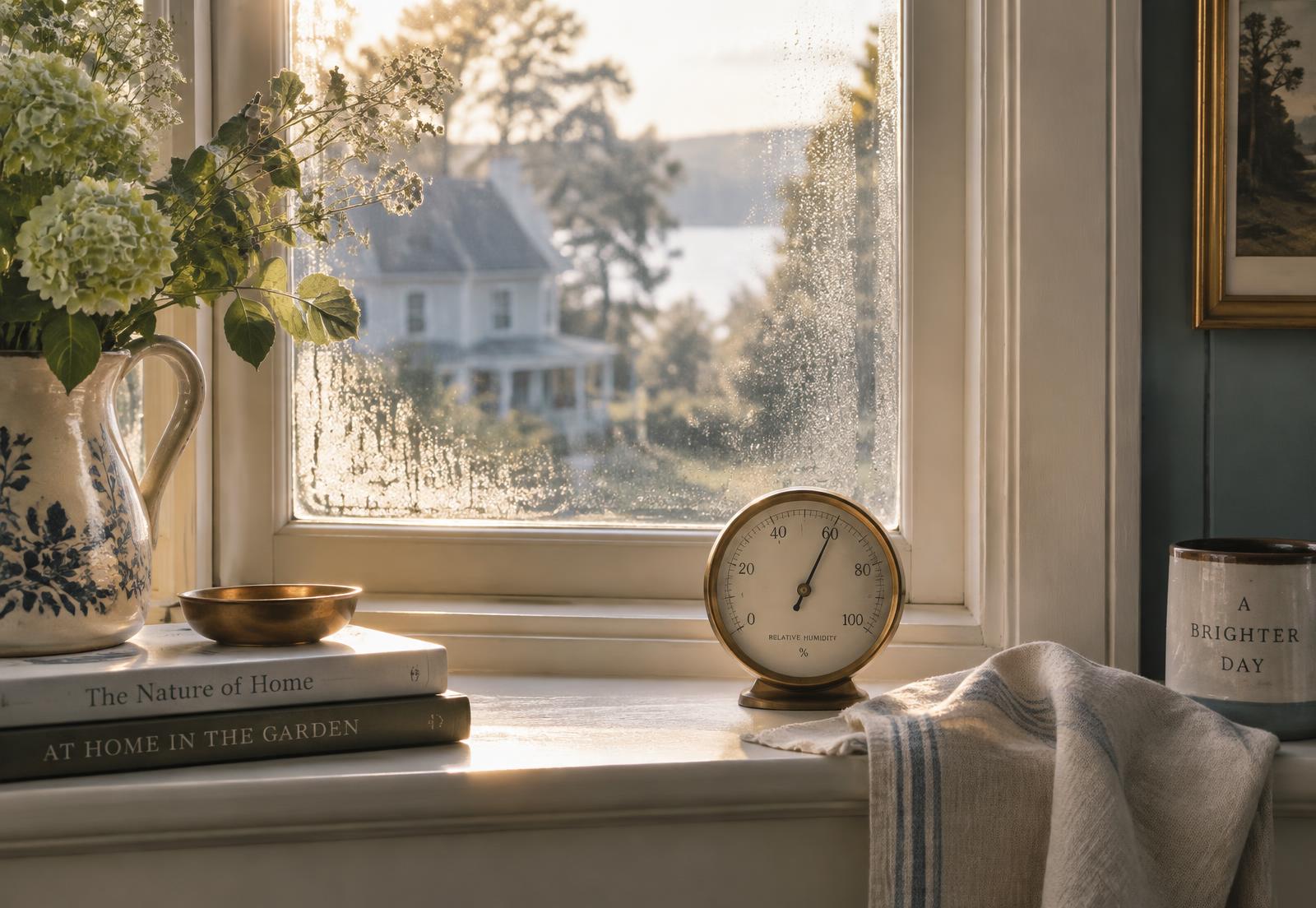
- Measure your indoor humidity with an inexpensive hygrometer so you're working from a number, not a guess.
- Run bathroom and kitchen exhaust fans during and after showers and cooking.
- Make sure clothes dryers vent outdoors.
- Open blinds and curtains during the day so warmer room air can reach the glass.
- If you use a humidifier, turn it down during very cold weather.
- Wipe up water on sills promptly so it doesn't soak into wood or paint.
What humidity level should I aim for?
The EPA's guidance on indoor moisture suggests keeping indoor relative humidity below 60 percent, ideally between 30 and 50 percent. In very cold weather, you may need to stay toward the lower end of that range to keep windows clear. Check the source linked below for the current recommendation.
Checklist
- Identify which surface the moisture is on
- Check indoor humidity with a hygrometer
- Confirm bathroom and kitchen fans work and are being used
- Check that the dryer vents outdoors
- Inspect sills and frames for softness, peeling paint, or dark spots
When to call a professional
- Moisture or fogging is trapped between the panes (a window professional can advise on glass unit replacement).
- Wood frames or sills feel soft or show rot.
- You see mold spreading beyond a small area, or anyone in the home has health concerns related to mold.
- Condensation continues even after humidity is well controlled.
Sources
Studio800 provides general educational information, not professional advice. Your equipment manuals, local codes, and qualified professionals take priority. Editorial standards
Keep reading
How to Choose a Home Humidity Monitor
What to look for in a simple hygrometer, and where to put it.
How to Recognize Early Signs of Household Water Damage
Stains, smells, soft spots, and other early signals that water is getting where it shouldn't.

What Causes a Draft Around a Door?
Cold air at an exterior door usually comes from a worn seal, a gap at the bottom, or a door that no longer closes squarely. Most causes are easy to find.