

Doors & Windows
What Causes a Draft Around a Door?
Cold air at an exterior door usually comes from a worn seal, a gap at the bottom, or a door that no longer closes squarely. Most causes are easy to find.
By Studio800 Editorial · Published November 2, 2026 · Updated
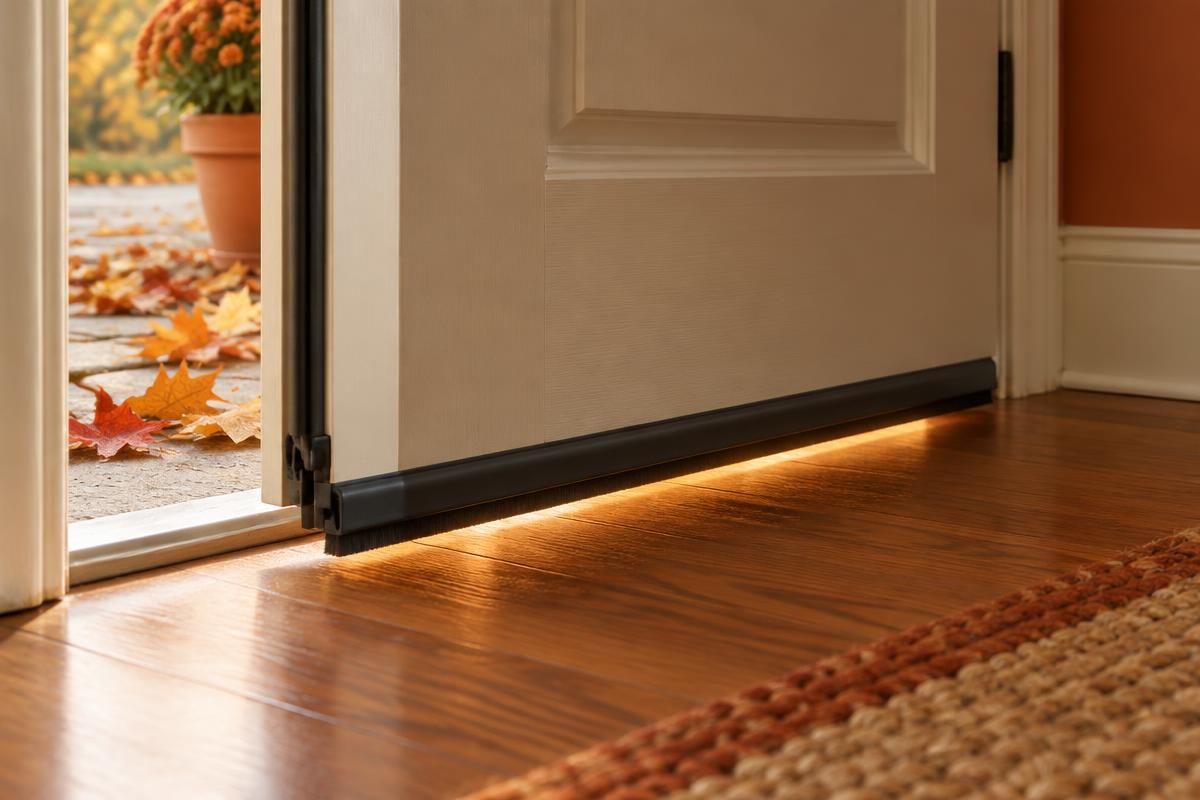
Four simple ways to find the leak
- Look: in daylight, close the door and turn off the lights inside. Visible daylight around the edges marks a gap.
- Feel: on a cold or windy day, slowly move the back of your hand around the frame.
- The paper test: close the door on a sheet of paper. If it slides out with no resistance, the seal at that spot is weak. Try several points around the frame.
- Watch for movement: hold a stick of incense or a lightweight ribbon near the edges and see whether it flutters. (Keep any flame away from curtains and never leave it unattended.)
Common causes
Weatherstripping flattens, cracks, or tears with years of use. Door sweeps wear away at the bottom. Thresholds on many doors are adjustable and may have worked loose. Hinges can loosen, letting the door sag so it touches the frame on one side and gaps on the other.
Reasonable do-it-yourself steps
The Department of Energy's Energy Saver guidance explains the main types of weatherstripping and where each works best — see Sources below.
- Tighten hinge screws. If a screw spins without tightening, a longer screw that reaches the framing may help.
- Replace worn weatherstripping. Bring a piece of the old material to the store to match its profile.
- Install or replace a door sweep on the bottom of the door.
- Check whether your threshold has adjustment screws and raise it slightly so it meets the sweep.
Checklist
- Do the daylight and paper tests around the whole door
- Inspect weatherstripping for flattening or tears
- Check the door sweep and threshold
- Tighten hinge screws
- Replace or adjust the worn part
When to call a professional
- The door frame is rotted, cracked, or soft.
- The door binds badly, won't latch, or the frame appears to have moved — this can indicate structural settling.
- There's water coming in around the door or under the threshold.
- You'd like to replace the door or the whole frame unit.
Sources
Studio800 provides general educational information, not professional advice. Your equipment manuals, local codes, and qualified professionals take priority. Editorial standards
Keep reading
Weatherstripping vs. Caulking: What's the Difference?
One seals parts that move, the other seals joints that don't. Here's when to use each.

A Practical Fall Home Maintenance Checklist
Autumn is the season to prepare for cold weather: clear water's path away from the house, ready the heat, and check safety devices.

Why Is There Condensation on My Windows?
Fog or droplets on glass usually point to indoor humidity meeting a cold surface. Where it forms tells you a lot about what to do next.