
Heating & Cooling
Why Is One Room Colder Than the Rest of the House?
A cold bedroom or stubbornly chilly office doesn't always mean your furnace is failing. Learn how to distinguish airflow, insulation, air leaks, and thermostat problems before spending money on the wrong fix.
By Studio800 Editorial · Published November 2, 2026 · Updated
The room is cold, but what kind of cold?
The first distinction is between a room that never warms up and one that becomes uncomfortable only at certain times. A north-facing bedroom may receive less winter sunlight than a south-facing living room. A room over a garage or next to an unconditioned attic may lose heat differently from an interior room. A home office with a large window may feel cold because of a chilly glass surface or air movement even when the air temperature is similar to that of neighboring rooms.
Try keeping a simple log for a few days. Record the thermostat setting, the approximate room temperature from a portable thermometer, time of day, outdoor weather, and whether doors are open or closed. A thermometer won't tell you why the room is cold, but the pattern can tell a professional where to look. If the issue is strongest on windy days, air leakage deserves attention. If it occurs whenever the door is closed, room airflow or return-air pathways may be involved.
Begin with the things you can inspect safely
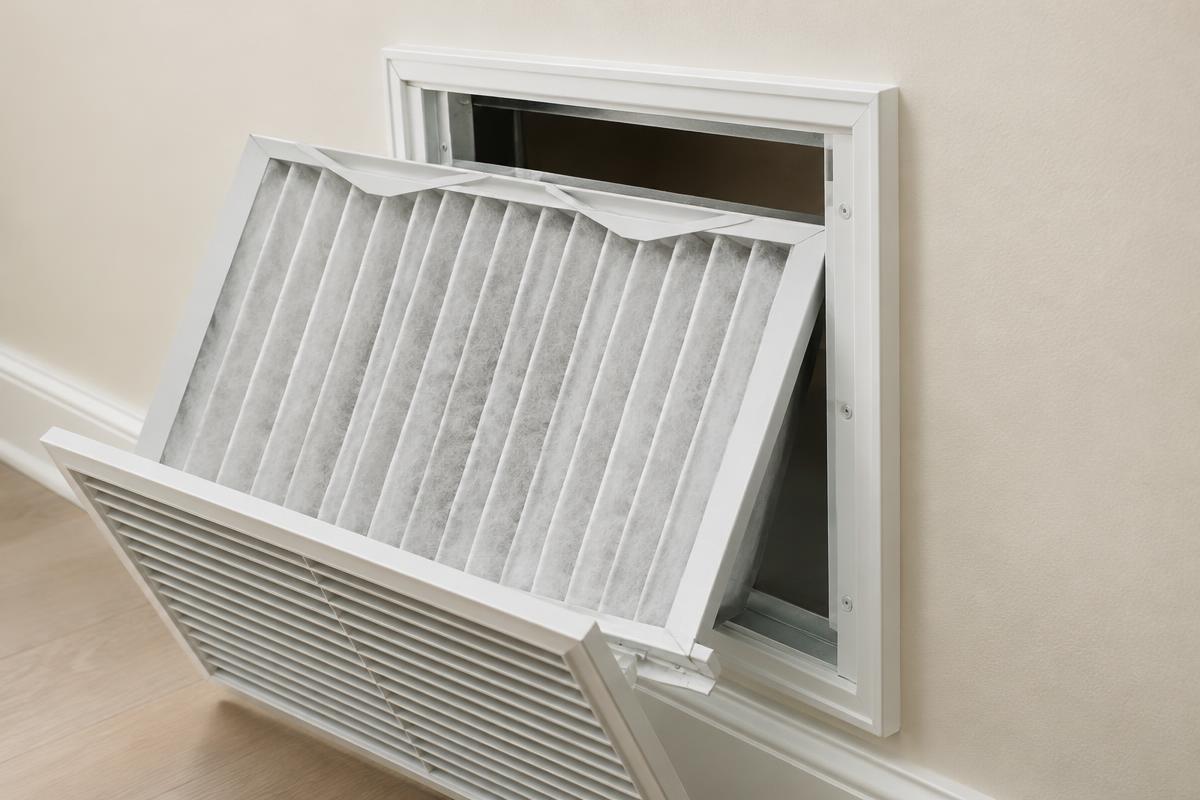
Look at the room's supply register and any return grille. Furniture, rugs, curtains, and stored objects can obstruct airflow. Make sure the grilles are visibly clear. Compare airflow with similar registers in other rooms while the system is operating, without inserting objects into the grille or removing ductwork. Don't start by closing many vents elsewhere in the house: a forced-air system is designed to operate within a pressure and airflow range, and arbitrary changes can create other problems.
Check that the thermostat is in a reasonable location and that the whole system is reaching its intended temperature. If your furnace or air conditioner has an accessible replaceable filter, follow the equipment manufacturer's filter specifications and maintenance instructions. A badly obstructed filter can reduce whole-system airflow; an incorrectly selected high-resistance replacement can also be a problem. Our separate filter guide should cover that question fully, so this article needn't repeat it.
Air sealing and insulation do different jobs
A room can lose warmth through two separate mechanisms. Insulation slows the passage of heat through a wall, floor, or ceiling. Air sealing reduces uncontrolled movement of air through cracks and gaps. The U.S. Department of Energy explains these as complementary measures: insulation is rather like a sweater, while an air barrier is the windbreaker that keeps moving air from undermining the sweater.
That difference matters when choosing a repair. A window frame that leaks air might benefit from appropriate weatherstripping or sealing. A room below an inadequately insulated attic may need an attic assessment. A bedroom over a garage can be affected by the floor assembly. The right solution is determined by the actual path of heat loss, not by how expensive an advertised insulation product looks. A professional energy assessment may include diagnostic tools to identify air leakage and other deficiencies.
Ductwork can make some rooms uncomfortable
In a forced-air house, heat must arrive at the right room in the right quantity, and air must have a suitable way to return to the system. A damaged, disconnected, restricted, or poorly insulated duct can compromise that balance. ENERGY STAR identifies uneven temperatures between rooms as one of the clues that ducts, insulation, or air leakage may deserve investigation. A room located at the far end of a poorly designed distribution system can be affected even if the heating equipment itself is in good condition.
Some symptoms call for a professional rather than improvised fixes. Accessible visual checks may reveal a visibly crushed duct or an obvious disconnected fitting, but adjusting dampers, modifying duct trunks, insulating ducts in unsafe spaces, or changing blower settings should be evaluated by someone who understands the system. If the home uses a heat pump, radiators, or another form of heating, the relevant distribution issues will differ.
Spend money on diagnosis before replacement
A contractor may propose a larger furnace, an additional heater, new windows, extra insulation, or duct modifications. Some of those may be appropriate, but the cold room itself does not establish which. Oversized equipment isn't automatically better; simply adding a space heater can introduce electrical and fire-safety concerns without resolving the underlying issue. If the room is chronically uncomfortable, ask a qualified HVAC contractor or home energy auditor to explain the likely cause, the evidence supporting it, and which lower-cost remedies should be considered first.
A clear diagnosis can also help you decide whether the discomfort is a small adjustment or part of a broader home-performance problem. That's a better basis for spending than guessing from a thermostat reading alone.
Checklist
- Compare the room's temperature with adjacent rooms at several times of day.
- Note whether the room feels worse when windy, after sunset, or when its door is shut.
- Clear furniture and rugs away from supply registers and return grilles.
- Check accessible filters and thermostat settings according to equipment instructions.
- Look for obvious window or door drafts without dismantling trim or equipment.
- Ask for a diagnosis of insulation, air sealing, and duct performance if the problem continues.
When to call a professional
- Heating equipment behaves abnormally, shuts down repeatedly, or produces an unfamiliar burning smell; follow emergency guidance if gas or carbon monoxide is suspected.
- The room has very little airflow even after simple obstructions are cleared.
- You suspect disconnected ducts, inadequate insulation in inaccessible areas, or significant air leakage.
- Someone proposes major equipment replacement without explaining the reason for the room's temperature difference.
Sources
Studio800 provides general educational information, not professional advice. Your equipment manuals, local codes, and qualified professionals take priority. Editorial standards