

Heating & Cooling
Why Is the Air Conditioner Running but Not Cooling?
When the air conditioner seems to run endlessly and the rooms stay warm, begin with a handful of safe checks. Learn which clues suggest airflow, thermostat, outdoor-unit, or professional service problems.
By Studio800 Editorial · Published November 2, 2026 · Updated
First identify what “running” means
A thermostat screen that says Cool On does not prove the entire cooling system is operating. Sometimes the indoor fan is running while the outdoor compressor isn't; sometimes the outdoor unit runs but airflow through the house is weak. At other times, the equipment works normally but struggles to keep up with exceptional outdoor heat, solar gain, or inadequate insulation. Those situations look similar from a warm living room, but they don't point to the same repair.
Check the thermostat: is it set to COOL rather than HEAT or OFF? Is the target temperature below the room temperature? Has a schedule or temporary hold changed the setting? If the fan is set to ON, the blower may circulate air even when the cooling cycle isn't active; AUTO commonly runs the fan according to the system's calls. Heat pumps, zoned systems, and smart thermostats can behave differently, so consult the actual controls before changing advanced settings.
Take the safe airflow checks seriously
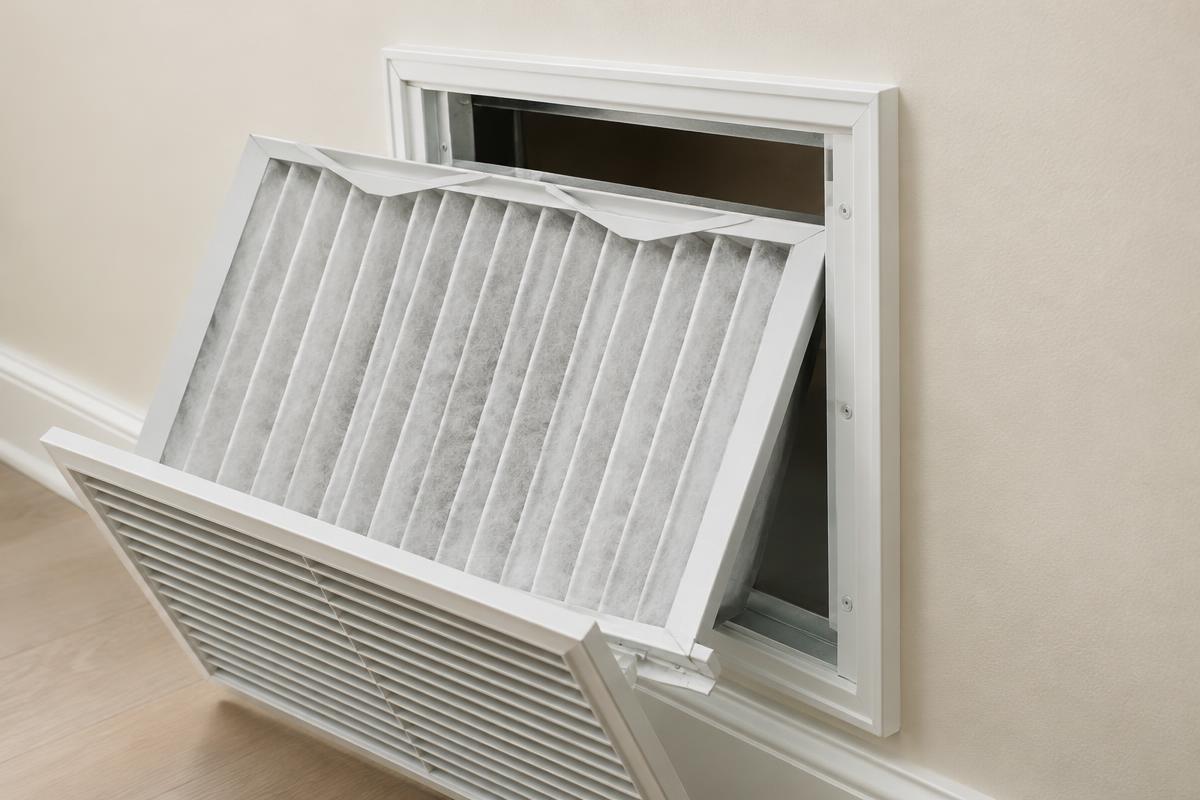
ENERGY STAR identifies dirty filters and neglected maintenance as major contributors to poor HVAC performance. Inspect the filter using the manufacturer's instructions, and replace or clean it if needed. Make sure supply registers aren't covered by rugs or furniture and that accessible return grilles aren't blocked. Do not remove sealed equipment panels or reach into the air handler. If you encounter an unfamiliar filter arrangement, ask your technician how the system was designed to operate.
A blocked return or severely dirty filter can restrict airflow through the indoor cooling coil. If you see frost or ice on accessible parts of the indoor system, that is a sign to stop assuming the problem is just a warm day. Restricted airflow and refrigerant-related faults are among possible causes, and continued operation in cooling mode can aggravate the issue. Don't scrape ice or pour hot water on equipment. Follow the manufacturer's shutdown guidance and call for service.
Inspect around the outdoor unit, not inside it
The outdoor condenser needs adequate airflow. From ground level, look for leaves, tall weeds, stored items, or debris immediately crowding the unit. A careful cleanup of loose material around an operating system may be appropriate if you keep clear of moving parts and electrical equipment, but don't remove covers, wash electrical compartments, or reach through the grille. ENERGY STAR recommends keeping indoor and outdoor units free of obstructing debris; coil cleaning and refrigerant evaluation belong on a professional maintenance checklist.
If the outdoor unit makes a hard buzzing sound, clicks repeatedly, fails to start, or stops unexpectedly, leave it alone and arrange service. Capacitors and other components can remain dangerous even after ordinary controls have been switched off. Frequent breaker trips also warrant qualified investigation; repeatedly resetting a protective device is not a solution.
The house itself can defeat a working AC
A western-facing room with large windows may feel hot late in the day even while other rooms cool normally. A poorly insulated attic, leaky ductwork, open windows, or a significant amount of indoor moisture can increase the load on the system. Closing blinds during peak sun, using ceiling fans appropriately, and correcting obvious air leaks can improve comfort, but these steps don't repair malfunctioning cooling equipment.
Record several observations for the technician: indoor temperature, target setting, outside weather, which rooms are affected, filter condition, unusual odors or sounds, and when the problem began. Avoid making a dramatic diagnosis from a single reading. A technician can evaluate airflow, electrical operation, condensate drainage, refrigerant charge, and equipment condition with appropriate instruments.
Know when troubleshooting should end
If a normal filter change and obvious thermostat corrections don't restore comfort, further DIY experimentation rarely helps. A qualified HVAC technician can distinguish a failed component from duct restrictions, control issues, or an aging system. Ask for the specific finding, what was measured, and whether the repair addresses a recurring underlying issue. A clear diagnosis is better than immediately assuming you need a whole new air conditioner.
Checklist
- Confirm COOL mode, the intended temperature, and the thermostat schedule.
- Note whether air flows from registers and which rooms are affected.
- Check and appropriately service the filter; clear blocked accessible registers.
- Look for debris crowding the outdoor unit without opening or reaching into it.
- Stop cooling and seek service if you see ice, water leaks, repeated trips, or abnormal operation.
- Record the symptoms and request an explanation of the technician's findings.
When to call a professional
- Ice appears on the system or cooling remains poor after safe airflow checks.
- The outdoor unit buzzes, repeatedly starts and stops, or doesn't run when expected.
- A breaker trips repeatedly, wiring looks damaged, or water is near electrical equipment.
- The system may need refrigerant, coil cleaning, control diagnosis, or other internal work.
Sources
Studio800 provides general educational information, not professional advice. Your equipment manuals, local codes, and qualified professionals take priority. Editorial standards
Keep reading
How Often Should I Check or Replace My HVAC Filter?
A simple habit that helps your heating and cooling system run as intended. Here's how to find your filter, read its label, and set a sensible routine.
Thermostat Problems: What to Check Before Replacing It
A blank screen, wrong temperature, or system that refuses to respond doesn't always mean the thermostat has failed. Work through the simple checks before buying new controls or calling for service.
Why Is One Room Colder Than the Rest of the House?
A cold bedroom or stubbornly chilly office doesn't always mean your furnace is failing. Learn how to distinguish airflow, insulation, air leaks, and thermostat problems before spending money on the wrong fix.